Tier lists for groups
Tier lists are not only for hot takes. Because they force quick, visible judgements, they are a handy way to get a group talking and to make a decision.
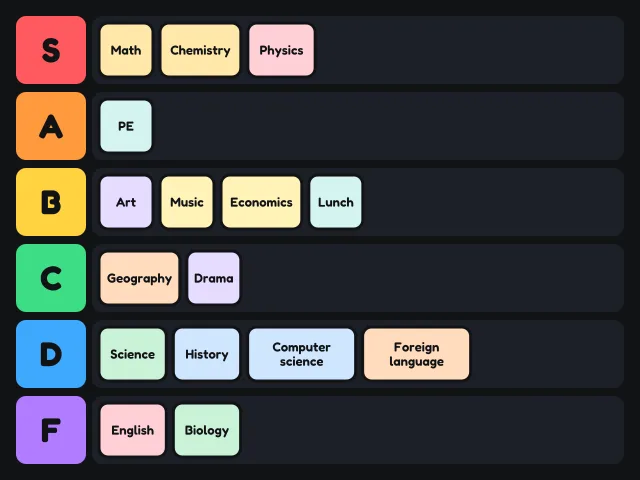
Why tier lists work for groups
A tier list shows a whole set of opinions at once. Everyone can see where each item landed and argue about one card at a time. Grouping into tiers is also easier than a strict order, so people commit to an answer faster, and the discussion moves to the cards people disagree on, which is where it is useful.
In the classroom
- Debate starter. Ask students to rank inventions, historical figures or characters in a book, then defend one placement in a sentence or two. The reasons matter more than the ranking.
- Revision. Students rank topics from "I could teach this" (S) to "No idea" (F). It shows the teacher where to spend the next lesson.
- Vocabulary and language practice. Ranking foods, places or hobbies gives students a reason to use comparatives: better than, the worst, more interesting.
- Exit tickets. Rank today's activities. It takes a minute and the feedback is honest.
TierZilla needs no accounts, which matters in schools. Pupils open the page, paste the list you give them and start. Use Copy link to hand out the same set of cards to everyone; each person's changes stay on their own device.
At work
- Prioritising. Put candidate features, tasks or ideas on cards. Rename the tiers to "Do now", "Next", "Later" and "Drop". It is a quick, visual version of a prioritisation meeting.
- Retrospectives. Rank what happened during a project from "Keep doing" to "Never again".
- Choosing a tool or vendor. Rank the options on one criterion at a time, such as price, then ease of use. Seeing several boards side by side often settles the choice.
- Team building. A breakfast foods or holidays tier list is a low-stakes way to start a meeting.
With friends
- Same deck, separate boards. Send everyone the same link, have each person rank on their own, then compare screenshots.
- Pass the phone. Take turns placing one card each on a single board. No moving anyone else's cards.
- Blind round. Play blind ranking with a category everyone knows and see who ends up with an empty S tier.
- Plan something. Rank restaurants, films or trip ideas to choose what to do this weekend.
Keeping it friendly
Rank things, not people. If your group ranks each other's cooking or music taste, keep it light and make sure everyone is in on the joke.