What is a tier list?
A tier list sorts things into ranked groups instead of a strict 1 to 10 order. Here is what each tier means and where the idea came from.
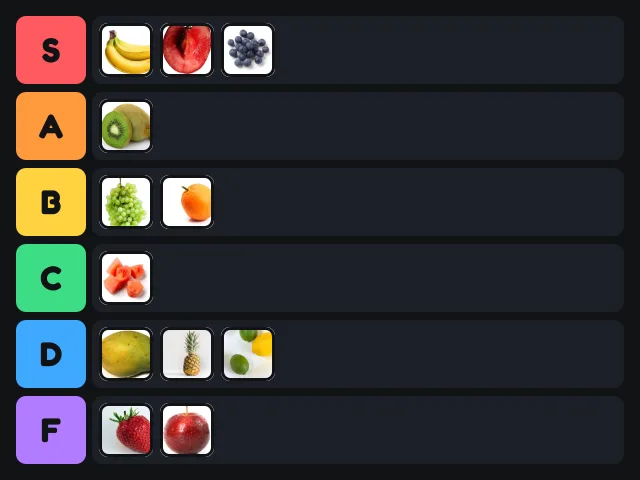
A tier list is a ranking that puts things into groups, called tiers, instead of giving each one its own number. The usual tiers run from S at the top through A, B, C and D down to F at the bottom. Everything in the same tier is roughly as good as everything else in it. Order inside a tier matters less, although many people still put their favourite on the left.
That small change is why tier lists are so popular. A numbered list makes you decide whether pizza is fourth or fifth best, which nobody can really defend. A tier list only asks whether pizza is great, good, fine or bad, and most people can answer that in a second.
What each tier usually means
- S tier: the very best. Things here are a cut above even very good options. Many people keep S small on purpose, so landing there means something.
- A tier: excellent. You would happily pick anything here.
- B tier: good, with a flaw or two.
- C tier: average. Fine, forgettable, or good only now and then.
- D tier: below average. You would rather have almost anything else.
- F tier: the worst, often with a story attached.
None of this is fixed. Some lists add an SS tier for one untouchable favourite. Others drop D, rename tiers to things like "Would die for" and "Never again", or use numbers instead of letters. On TierZilla you can rename any tier, change its colour or add more by clicking the tier label.
What does the S in S tier stand for?
Nobody fully agrees. The A to F part comes from school grades, especially in the United States. The S on top is more of a mystery. It is common in Japanese video games, where a stage or a run can earn an S rank for going beyond an A. Popular explanations include "special", "superior" and the Japanese word shū (秀), used for the top grade in some Japanese grading systems. Whichever is true, S tier now simply means "better than the best grade".
Why is there usually no E tier?
Most American schools went straight from D to F, with F standing for "fail", and tier lists copied that. Some lists include E anyway. If you want it, add a tier and call it E.
Where tier lists came from
Ranked tiers have been used for a long time in competitive games. Fighting game and platform fighter communities used character tier lists to argue about which fighters were strongest at a high level. The format spread to every other kind of game, then to everything else: snacks, films, cities, chores and friends. Short-video apps turned it into a format of its own, with creators ranking things live while the comments argue back.
Tier list or ranking: which should you use?
Use a tier list when you have many items, when several of them are close, or when you want people to argue. Use a strict numbered ranking when the order of every item matters, such as a top 10 countdown. If you cannot decide, try blind ranking, which mixes the two and adds a little chaos.
Try one
The quickest way to understand a tier list is to make one. The fruit template has twelve photos ready to drag, and it takes under a minute. If you would rather start from your own list, read how to make a tier list.